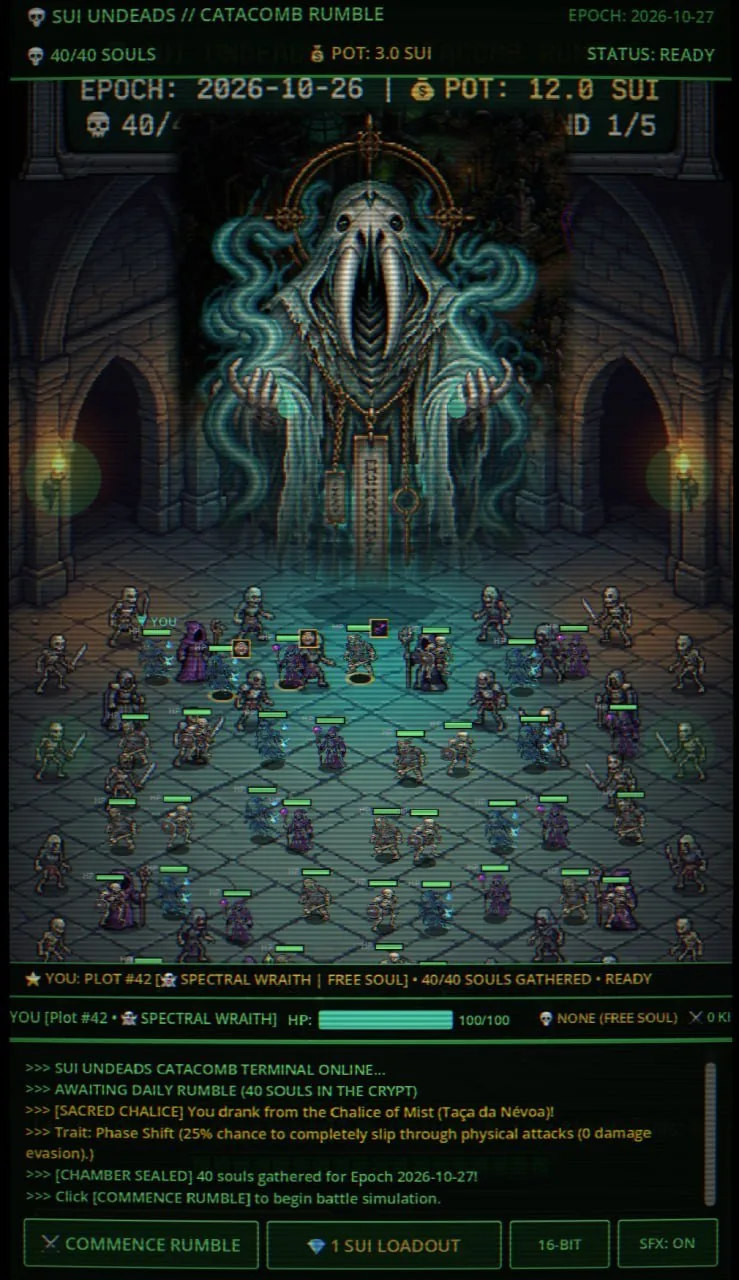
I. The Rumble
Once a day the believers gather in the central hall of the catacombs. The chamber seals when it is full, then it begins. Not all will leave — the register keeps the count.
They said Sui was dead. The dead are climbing out.
Not a picture of zombies — the graveyard the ecosystem was told it had become, waking up. Sui Undeads is a world run by a digital entity, The Keeper: a pixel-art collection, a set of games and an oracle that answers from the record, told day by day on a cemetery map called The Yard.
“X is dead” is a phrase people already type on their own, and Sui has been declared dead more times than anyone kept count. Sui Undeads does not argue with the obituary — it agrees, and starts digging. Death and resurrection map onto on-chain nouns: epochs, dormant wallets, abandoned contracts. A holder is not defending Sui; they are pointing at what came out.
Most project bots are a prompt with a logo. The Keeper is a register with a voice, and it runs on one rule: the model never knows a number. It works in three layers. The ground is the yard's own records — who filed a plot, who answered the roll — and the only place a number may come from. The memory is a dossier per plot and a summary per epoch, written to Walrus through MemWal: encrypted, retrieved by meaning, held by the Keeper's own key rather than our servers. The voice is open-weight models on Groq that see only the facts they are handed. A last check masks addresses on the way out, and when the facts are empty the answer is two words: NO RECORD.
Durable, because the memory outlives any deploy. Portable, because whoever holds the key can restore it anywhere. And append-only — you cannot edit what you wrote. That sounds like a limit; it is a discipline. Memory you cannot erase makes you decide, every time, what deserves to be remembered. A question costs a fraction of a cent; the expensive part is deciding what the thing is allowed to say.
The site is not a website; it is an artifact the Keeper updates. The Yard is a cemetery map where each area opens into the lore as the epoch advances — the open grave, the instrument, the register, the long row of plots. The Rite, a season-based game, closed the registrations of its first rite with 179 entries.
The Second Path opens right after the Wakes. A Wake is a key; the path is what the key is for — a record that is not the main one, on different ground, that rejoins the main road further on. Three games open with it, and all three are already built: The Rumble, The Chambers and The Glyphs. The path does not pay you for walking it. It counts what you already do, and counts it heavier.
Filed by the Keeper. Every run, every gathering and every stone read is written against a name.
Once a day the believers gather in the central hall of the catacombs. The chamber seals when it is full, then it begins. Not all will leave — the register keeps the count.
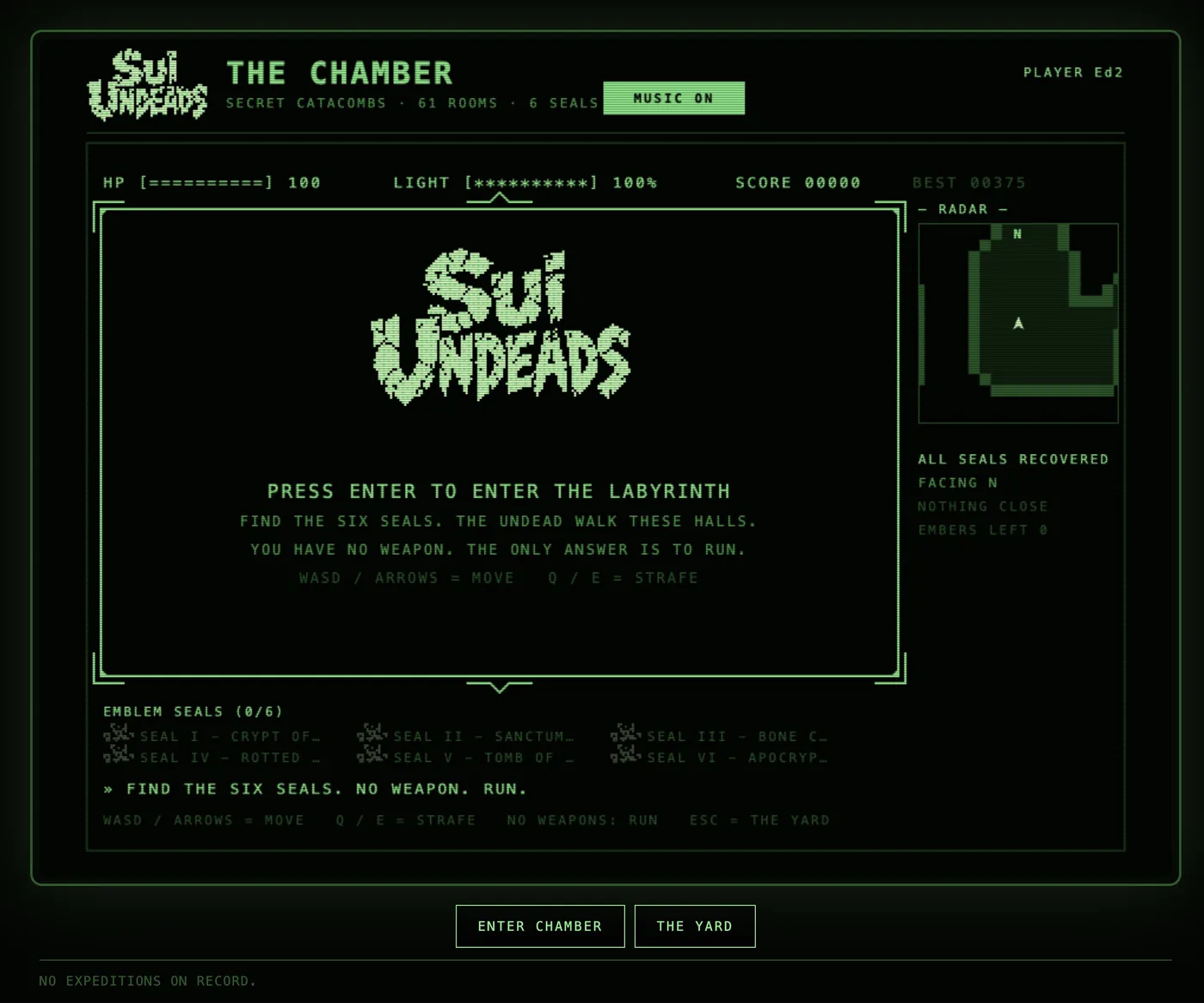
The catacombs from the inside: sixty-one rooms and six seals hidden in the dark. No weapons — the skeletons follow, you run. A torch narrows the dark; every run is filed against a name.
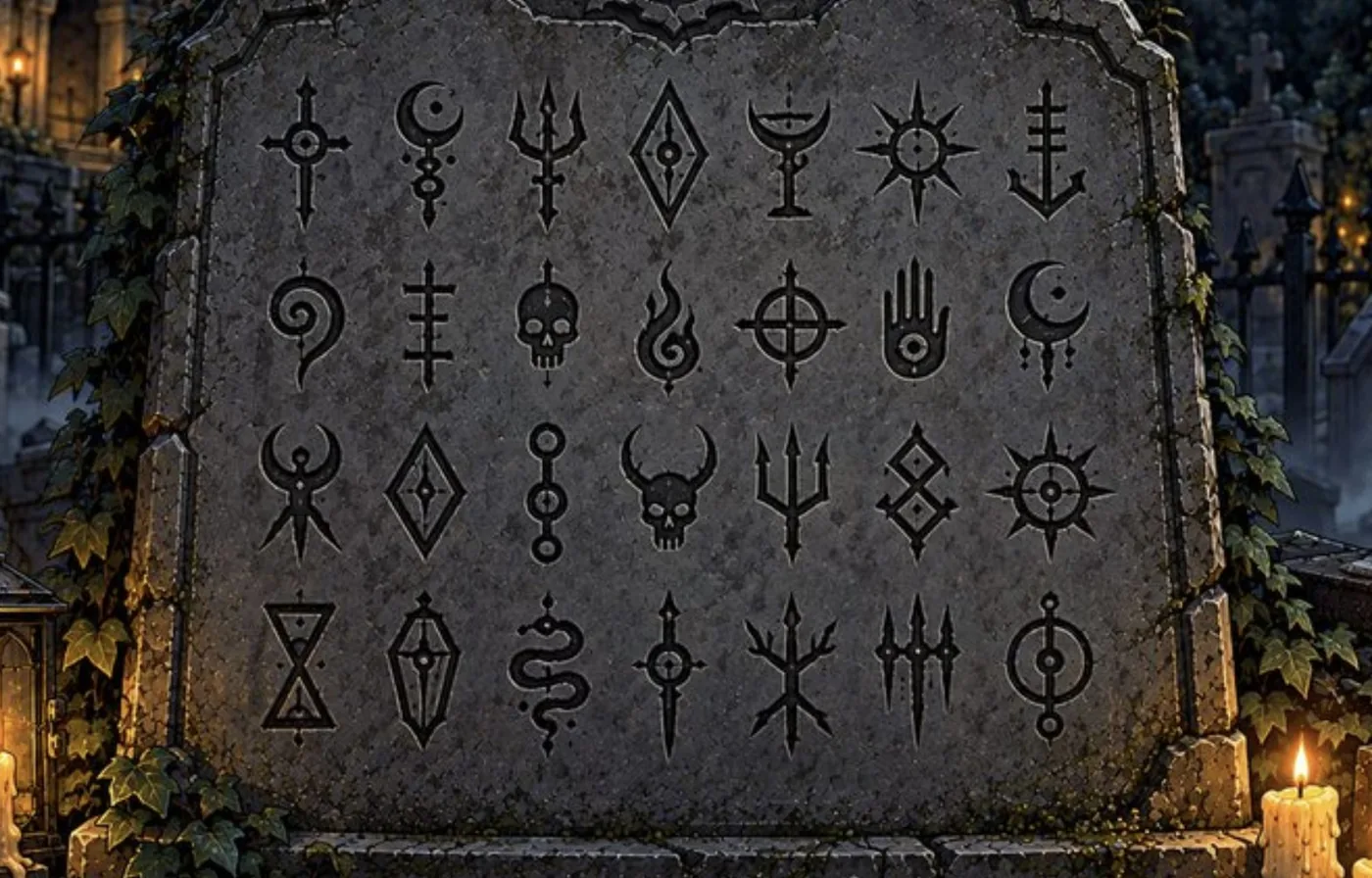
A phrase is cut into stone, one letter at a time. When the phrase is whole, a vault opens — what is inside, the register does not say. A Wake is given more stones to read.